
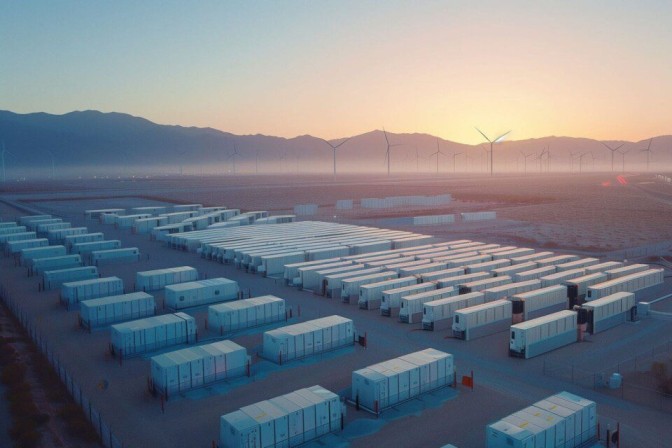
Romanian BESS projects become financeable only when grid constraints, market participation and contract structure line up in one coherent diligence file.
A practical view on how grid capacity, storage solutions and regulatory timing shape the real economics of large-scale projects - and what investors actually test in due diligence.
A practical view on how grid capacity, storage solutions and regulatory timing shape the real economics of large-scale projects - and what investors actually test in due diligence.
Utility-scale infrastructure and storage projects reshape how grid risk is priced in Romania.For most investors, the question is no longer whether renewables in Romania are attractive, but whether specific projects are bankable once grid, regulation and execution risk are priced correctly.
1. Grid capacity is now a commercial issue, not a technical footnote
Discussions about grid connection used to be handled late in the process, as a largely technical matter. Today, investors focus early on connection conditions, curtailment risk and realistic timelines - because these directly change valuation, financing structure and exit strategy.
A project with an apparently attractive PPA can become unbankable simply because the connection timeline or N / N-1 constraints are not clearly understood or priced in.
Questions that investors actually ask
- Is the connection firm or non-firm, and how is curtailment treated in the contracts?
- Who bears the real cost and timing risk for grid reinforcements?
- How realistic are the milestones compared to the behaviour of local authorities and TSOs/DSOs?
2. Storage changes the conversation - but only if documents reflect it
Storage (BESS) is often mentioned in presentations, but not always reflected in land rights, permits and technical documentation in a way that financiers would expect. The result: marketing materials include storage, but the project data room does not.
Where storage is part of the strategy, land, grid and contractual documents should make this explicit - otherwise the "option" is, in practice, just a slide in a deck.
3. Documentation that reads like a project, not a brochure
From a legal perspective, what differentiates a credible project is less about how it is described and more about how coherent the documentation is: land control, permits, grid files, contracts and corporate structure should all tell the same story.
"Investors do not need a perfect project. They need a project where risks are honestly mapped, contractually allocated and realistically priced."
This is where legal work is most valuable: not just in drafting, but in building a clear narrative that investors, lenders and technical advisers can all recognise as consistent.
4. Practical takeaways for developers and investors
- Treat grid, storage and land as a single story, not three separate files handled by different teams.
- Align contracts (EPC, O&M, connection, PPAs) with the actual risk allocation you expect to present to investors.
- Document assumptions clearly - especially on timelines, curtailment and upgrade costs.
When these elements are addressed early, both developers and investors save time: due diligence is faster, negotiation is more focused and the project has a clearer path from development to exit.
If you are working on a Romanian energy project and wish to discuss grid strategy, storage integration or transaction readiness, you can share a short summary of the assets and current status.